
Exile, Activism and the University
Alexander Kalgin, Magnolia
Overview
This online course examines the role of universities as spaces of protection for human rights defenders (HRDs) in exile, focusing on how academic institutions can provide protection for activists. Today, authoritarianism is rising globally, and those who dare to contest authoritarian governments are often forced into exile. Traditional measures of human rights protection may not be sufficient. In this context, universities have the capacity to function as semi-safe spaces that offer resources, networks, and communities that allow HRDs to sustain their work. Drawing on comparative case studies from Russia, Myanmar, the Czech Republic, Germany, and Thailand, the course integrates insights from sociology, political science, forced migration studies, and human rights research. We explore the factors contributing to or hindering activist agency in exile and use the concept of intersectionality to explore the challenges that HRDs face.
A distinctive feature of the course is that it brings together students, scholars, and activists as both participants and co-teachers. Activists in exile will join the sessions to share their lived experiences, discuss survival strategies, and reflect on the political and institutional challenges they face. The course is conducted in partnership with Off-University, an organisation dedicated to supporting at-risk scholars and activists through online formats.
The seminar is part of the joint research project with the University of York funded by the Gerda Henkel Foundation, which investigates universities as protection infrastructures for HRDs.
Learning Outcomes
A general understanding of:
- How universities (may) protect and support activists in exile.
- Core theoretical approaches to agency, activism, and exile under authoritarian regimes.
- Comparative cases of academic and activist displacement in Europe and Southeast Asia.
The skills to be gained upon active participation:
- Acquaintance with key literature on activism in exile.
- Skills in comparative analysis of country cases and different protection regimes.
- The capacity to clearly present analytical arguments in written and oral form.
Course Outline
You can see and download the course syllabus below.
Instructors
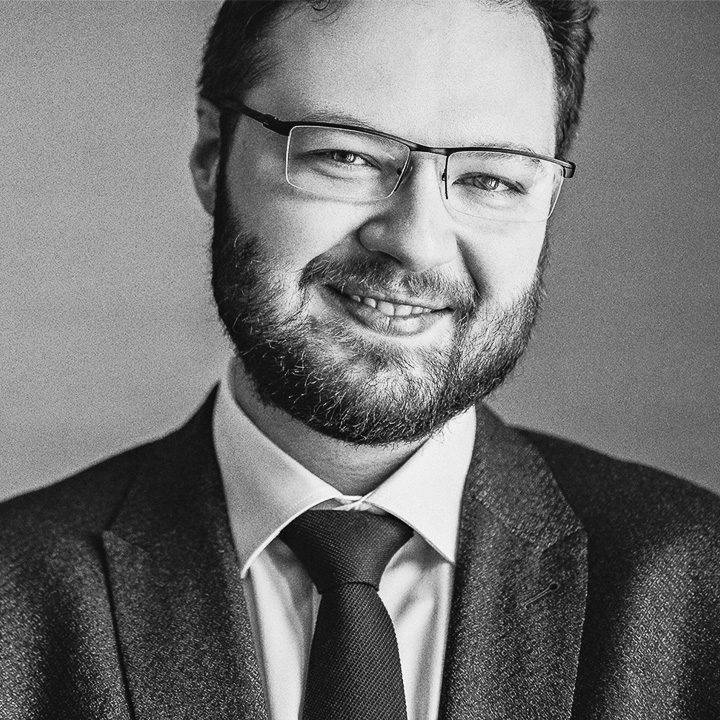
Alexander Kalgin
Alexander Kalgin is a sociologist and an economist. He served as an associate professor at the HSE University in Moscow, Russia, from 2010 to 2022, as a postdoctoral researcher at IOS Regensburg from 2021 to 2022, and held the position of a senior visiting researcher at Cluster of Excellence SCRIPTS between 2022 and 2023. Between 2023 and 2025, he worked at Constructor University Bremen. Currently, he is a visiting researcher at the Center of Reconciliation Studies at the University of Bonn. His academic interests include the sociology of academia and the sociology of forced migration.

Magnolia
She is a postdoctoral researcher at Center for Applied Human Rights, University of York. She has been empowering Myanmar youth human rights defenders through research and thematic training as a freelance consultant. Her research interests include homeland activism, academic freedom and human rights education, particularly in the Myanmar context.
Invited Speakers

Rosario Figari Layus
Rosario Figari Layus is Assistant Professor of Reconciliation Studies in the Department of Sociology at the University of Bonn. She holds a PhD in Political Science from Philipps University of Marburg, an MA in Social Sciences from Humboldt University of Berlin, and a degree in Sociology from the University of Buenos Aires. Her work and research focus on peace and conflict studies, conflict transformation, transitional justice, human rights protection and human rights activism.
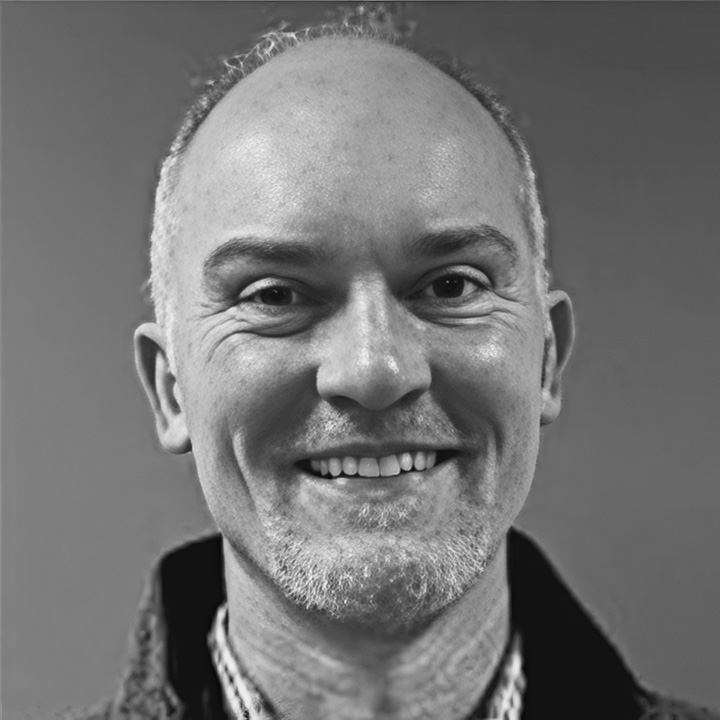
Paul Gready
Paul Gready is the Director of the Centre for Applied Human Rights at the University of York, and holds a UNESCO Chair focusing on the Protection of Human Rights Defenders and Expansion of Political Space. He has an MA and PhD from the University of London. His research interests include universities as sites of activism and protection, transitional and transformative justice, human rights cities, and the arts and human rights.
Nan Kham Mai
Nan Kham Mai is a freelance researcher in legal and human rights research. Her research interests span freedom of expression, academic freedom, human rights education, and legal education reform in Myanmar. She has been contributing to informal legal education programs for exiled students and ethnic youth empowerment in Myanmar and the borderland.
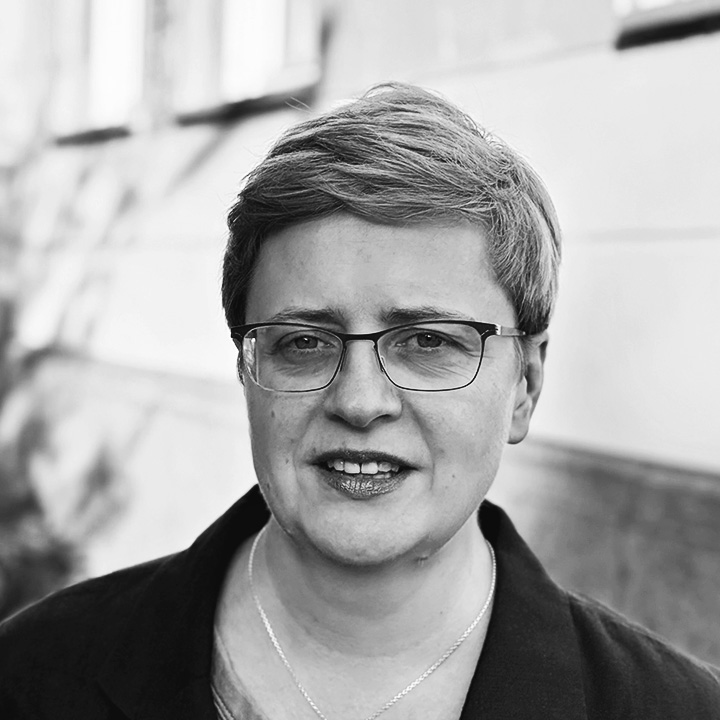
Tatiana Golova
Tatiana Golova, Dr. phil., is a sociologist whose work focuses on Russia, Germany, and transnational spaces. Her research interests include civic and political activism, migration, and social media communication. She combines interpretative qualitative approaches with quantitative and computational methods, including social network analysis, natural language processing, and surveys. She has previously worked at several German research institutions, including the Institute for East European Studies at Freie Universität Berlin, the Institute of Sociology at Otto von Guericke University Magdeburg, and the Centre for East European and International Studies in Berlin. As an independent researcher, Golova engages in applied, policy-relevant research and civic education.
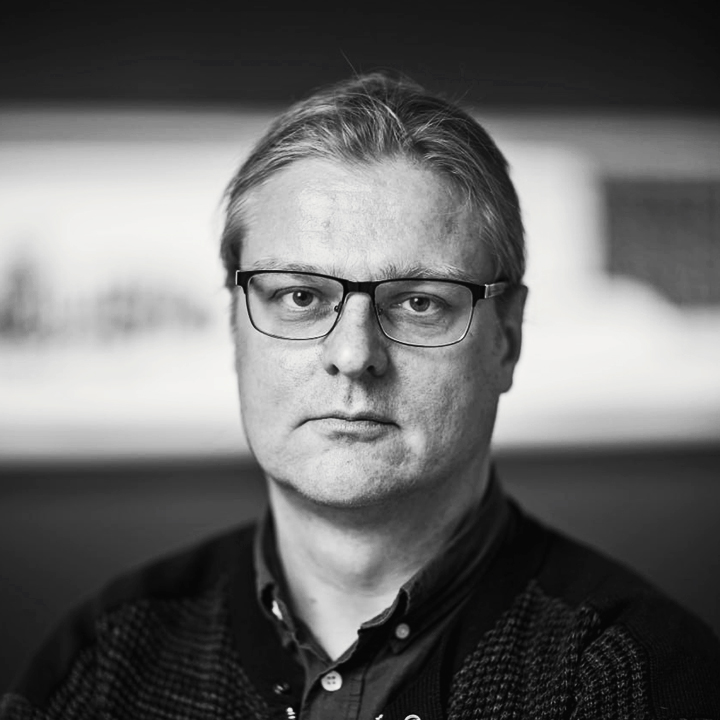
Dmitry Dubrovskiy
Dmitry Dubrovskiy – PhD (History) – research fellow, Department of Social Sciences, Charles University, Prague, and Center for Independent Social Research, George Washingon University, New York. His research is concentrated on the academic freedom in Russia, developments in Russian higher education, violation of academic rights. April 2022, he was declared ‘foreign agent’.
Alumni of Saint Petersburg State University (History) and European University at St. Petersburg (Ethnology) he was founder of the first human rights program for non-lawyers at Smolny college of liberal arts and science, teached in the numerous universities, including Columbia University, Bard College, Witwatersrand University.
Previously he was OSA Blinken Fellow (2025), IIE-SRF fellow at Harriman institute, Columbia University (2015-2017), Kone Fellow at the Helsinki Collegium of Advanced Studies (2011, 2020), Galina Starovoitowa Fellow at Kennan Institute, Woodrow Wilson Center (2007/2008), Reagan-Fascell Fellow in National Endowment for Democracy (2015).
Photo Credit: David Gonzalez, Forskerforum

Galina Selivanova
Dr. Galina Selivanova is a postdoctoral researcher at the Fern Universität in Hagen and holds a PhD from the Scuola Normale Superiore (2020). Her research focuses on civil society in hybrid and authoritarian regimes and on transnational repressions and authoritarianism. She uses both qualitative and quantitative methods to study political participation, activism strategies, Russian migration and Russian civil society in exile.

Anna Eroshenko
Philosopher, gender studies scholar, and feminist–queer activist. From 2019 to 2022, she was affiliated with the Higher School of Economics (HSE University). She participates in projects of various queer organizations as a guest expert and coordinator of support initiatives for queer people.
Research interests: political philosophy; philosophy of subjectivity; the public–private divide; gender epistemology; queerphobia in populist philosophical projects; LGBTQ+ rights as human rights.

Tatiana Gazarian
Coordinator of the Feminist Anti-War Resistance since 2024 and an activist in the movement since 2022. She studies social sciences at the University of Düsseldorf. She lives in Bonn, Germany, and was born in Krasnodar, Russia.

Tatiana Kasimova
Tatiana Kasimova is a sociologist and researcher focusing on Russian political migration and civic activism in exile. She holds an MA in Sociology from the National Research University Higher School of Economics (HSE), Moscow. Since 2023 she has been residing in Germany under Paragraph 22.2 of the German Residence Act. Her research interests include forced migration, adaptation and integration of Russian political migrants in Europe, and the transformation of civic and political activism in exile.
Before leaving Russia, she served as an opposition municipal deputy and later as Acting Head of the Khamovniki Municipal District in Moscow. Alongside her political and civic engagement, she has professional experience in public affairs, strategic communications, and public relations, working with both civil society initiatives and business organisations on policy-related and advocacy projects. She continues to be actively involved in civic and political initiatives within the Russian émigré community.
Certification
This course is hosted by University of Bonn, Center for Reconciliation Studies and certified with 6 ECTS upon successful completion.
Please check the course requirements from the course syllabus and inform your instructor(s) about your request to receive a certificate for this course.
You will find the full syllabus on Moodle course page.
At the end of the semester, the instructors will inform the learning designer about your request and grade. The certificate will be prepared with the university secretariat and it may take up to 8 weeks.
Registration
Our courses are held on a digital learning platform, Moodle. Before you create your account on Moodle, we have some notes for your and others’ digital security.
- When you register, you can use a nickname. Nicknames with offensive, racist or sexist undertones will not be accepted.
- Communication outside of the platform is not private. It is a solidarity action with people who would like to stay anonymous for different reasons. Please use our secure platform to communicate with others and respect their choices of communication channels.
- We aim to create an inclusive learning environment with our participants and educate ourselves in a more inclusive language. Be eager and tolerant to learn from each other and challenge any discriminating language. You can have a look at it here.
Creating a new account and registering to a course on Moodle
1. The link will take you to the Off University Moodle homepage.
2. Click the “Log in” button on the top right side of the page.
If you have an account on Off University Moodle, please login and continue from step 7 below.
3. Scroll down to see “Create new account” and click the button.
4. Please fill in the fields marked as *required.
You can use false information to protect your identity and increase your safety. You can enter a nickname, a false email address that resembles the format, such as name@example.org etc. Please note down your user name and password in a safe place.
5. Once you created your account, please wait until the next working day to continue.
Your account needs activation which will be done by Off University. We will need some time to activate your account. This can take up to 24 hours on weekdays and longer on weekends.
6. Please login to check whether your account it active. Once you can login, you will find the available courses on the home page of Moodle and will be able to register by clicking the course title.
7. You can now discover the course page. The first item on the page, General, contains the syllabus and the announcements. Please follow these announcements to stay up to date about your course.
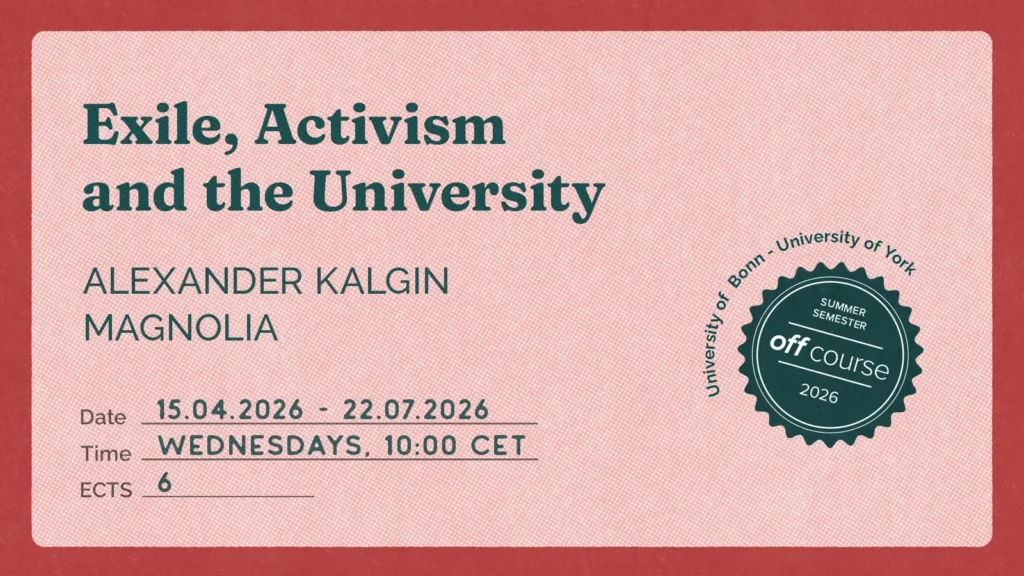
Course Details
Duration
15.04.26 – 22.07.26
Time
Wednesdays, 10:00 CET
Credits
6 ECTS
Language
English
Host Institution
University of Bonn, Center for Reconciliation Studies
Registration:
Supported by: