The workshop brought a diverse group together.
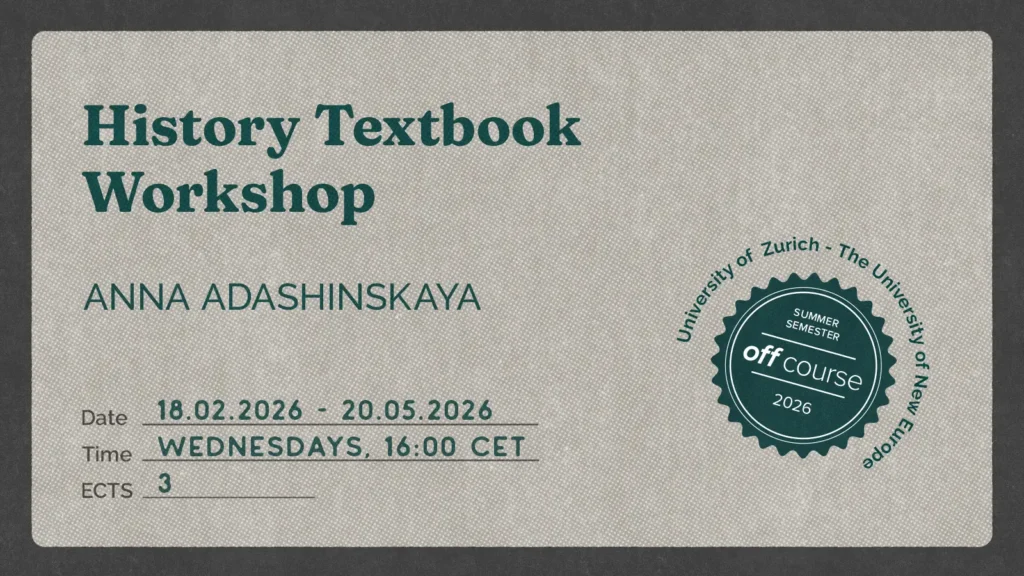
The History Textbook Workshop was a first for us in many ways. Not only did we design it for high school leavers aged between 14 and 25, thus appealing to a much younger group of participants than usual, but we also hosted it at the History Department of Zurich University, which gave us the opportunity to work with a Swiss university for the first time. Together with the course’s convenor, Dr Anna Adashinskaya — a historian specialising in Byzantium and the Slavic Balkans, and the intersection of memory, power and historical narratives — participants from countries as diverse as Afghanistan, India, Poland, Turkey and Bulgaria explored the ways in which history textbooks reflect political, cultural and ideological frameworks across different countries and contexts. In interactive and collaborative sessions, students critically examined history textbooks from different countries and periods of contemporary history, analysing how they shape historical narratives, influence identities and convey political messages. In the process, they developed key skills in source criticism and comparative analysis. Eight experts supported us in this endeavour by presenting textbooks and other historical source material within their areas of expertise, offering diverse national and methodological perspectives.
The History Textbook Workshop was funded by the EU as part of the “Project 2022/Eastern Academic Alliance”. The teaching team was appointed and supported by an advisory board from the academic solidarity network University of New Europe and Off University, comprising experts in history and other social sciences from leading international schools and universities.